Article Under Review
This article is undergoing editorial and medical review. We regularly update content as part of our commitment to providing patient-centered, accurate, evidence-based information.
Overview
After someone becomes a donor, the medical team checks each organ to see which ones are healthy enough for transplant. Every organ is tested on its own, since one may be a strong match while another is not. Blood work, imaging, and physical exams together build the picture of what each organ can do.
All of this happens quickly and in parallel with the family's care. The tests answer one question at a time. Is this heart healthy enough to use? Will these kidneys work in someone else? Once the team has the answers, the organ procurement team works with transplant centers to find the right recipient for each organ.
What determines whether an organ can be used
Not every organ from every donor is suitable for transplant. Even when someone is declared dead and the family has consented to donation, medical evaluation determines which organs can actually save or improve lives.
The evaluation process includes:
- Blood tests. Assess organ function and check for infections
- Imaging studies. CT scans, ultrasounds, and chest X-rays show organ health
- Physical examination. Direct assessment of organ quality and damage
- Medical history review. Underlying conditions that affect organ viability
- Tissue typing. Determines compatibility with waiting recipients
- Individual organ assessment. Each organ evaluated separately for transplant suitability
This comprehensive evaluation protects recipients and ensures organs are used wisely. It answers crucial questions about which organs are viable and which are not.
Evaluating the donor's organs
The organ procurement organization (OPO) coordinates the comprehensive evaluation of all potential donor organs. Medical teams examine each organ using multiple assessment methods: laboratory blood tests, detailed imaging studies, and direct physical assessment. Each organ is evaluated individually because viability can vary significantly.
Evaluation begins immediately after the family consents to donation. Some testing starts even earlier—when the person is first hospitalized, routine labs and imaging help inform later organ evaluation.
The evaluation answers critical questions: Is this heart healthy enough to transplant? Can these kidneys function in a new recipient? Will this liver work? Which organs are viable for transplant, and which are not suitable?
Medical tests and screening
Multiple tests assess whether organs are healthy and function well. These tests happen quickly and in parallel to move the evaluation forward rapidly.
Blood tests
Blood work provides essential information about organ function, infection status, and tissue compatibility. Liver function tests show bilirubin, albumin, and liver enzymes. Kidney function tests measure creatinine and BUN. Heart biomarkers like troponin and BNP assess heart muscle health. Blood cultures, CBC, and differential identify active infections.
Additionally, tissue type (HLA) matching determines compatibility with waiting recipients, blood type must be compatible, and extensive screening checks for HIV, Hepatitis B and C, syphilis, CMV, EBV, and other infections.
These comprehensive results inform critical decisions about which organs are viable and which recipients are appropriate matches.
Imaging
Detailed imaging studies assess organ structure, function, and any abnormalities. Different organs require different imaging approaches to evaluate them properly:
- Heart ultrasound (echocardiogram). Measures pumping function, valve integrity, any structural damage
- Chest X-ray. Shows lung condition, any aspiration, edema, or injury
- Abdominal CT or ultrasound. Visualizes liver, kidney, pancreas, intestine structure, size, any tumors or cysts
- Liver ultrasound with Doppler. Checks blood flow to the liver
- Vascular imaging. For some donors, CT angiography shows blood vessel anatomy
Imaging reveals whether organs are structurally sound and suitable for recovery and transplant. This detailed assessment helps teams understand any damage, disease, or abnormalities that might affect transplant success.
Organ-specific assessments
Beyond imaging, each organ type has specific assessments:
-
Heart. Echocardiogram measures ejection fraction, valve function, and wall motion. Ejection fraction below 40-50% typically makes it non-viable. Troponin and coronary risk are assessed.
-
Lungs. Chest X-ray evaluated for infiltrates, aspiration, edema. Arterial blood gas shows oxygenation. Bronchoscopy may assess lung tissue and rule out aspiration.
-
Liver. Liver function tests, ultrasound, and imaging check for cirrhosis, steatosis (fat), and tumors. Size must be adequate for recipient. Biopsies may assess steatosis.
-
Kidneys. Creatinine and BUN show baseline function. Age, hypertension, diabetes history, and cause of death factor in. KDPI (Kidney Donor Profile Index) provides quality assessment.
-
Pancreas. Serum amylase and lipase show function. Imaging assesses size, cysts, and lesions. Age and diabetes history are factors.
Which organs are viable?
Evaluation determines viability—whether an organ can be recovered and transplanted successfully. Not all organs from one donor are viable.
Viability varies significantly between organs from the same donor. A liver may be suitable while kidneys are not. A heart may be unsuitable due to coronary disease, but lungs may be excellent. One donor might provide six viable organs while another provides only one or none.
Viability depends on several critical factors. Organs are considered viable if they have normal structure without tumors or scarring, adequate function shown through good lab values and ultrasound, no serious infections, appropriate size for the recipient, and compatible blood type.
Organs are not viable if they show severe dysfunction, advanced disease like cirrhosis, active infections, tumors, size mismatches, or incompatible blood types. The assessment is individualized and flexible. For someone desperately waiting for an organ, more risk might be acceptable. For someone with other options, only the best organs are used.
The role of the OPO
The organ procurement organization oversees all evaluation. OPO staff:
- Coordinate with the donor hospital
- Perform the medical evaluation
- Order and interpret tests
- Maintain donor care
- Contact potential recipient hospitals
- Arrange transport
The OPO ensures that evaluation is thorough and that viable organs reach appropriate recipients. OPO coordinators are experts in organ procurement and allocation.
Timeline of evaluation
The evaluation timeline varies but usually follows this general pattern:
- Immediately after consent. Initial history and physical exam, routine labs and imaging already done
- First few hours. Blood work, imaging studies, and specialized tests ordered and results reviewed
- Parallel with waiting. As organs are evaluated, the OPO allocation team identifies potential recipients
- Organ-specific tests. Additional tests for specific organs (echocardiogram, liver biopsy, etc.) as needed
- Final decision. Accepting and declining hospitals are identified; recipients are confirmed
- Recovery. Once recipients are confirmed and surgical teams are ready, the donor is taken to surgery
The entire process, from consent to recovery, often takes 12-24 hours but can be faster or slower depending on complexity and recipient identification.
Additional Detailed Information
Additional Information
KDPI and DRI scoring systems
The Kidney Donor Profile Index (KDPI) provides a score from 0-100 predicting kidney longevity. Factors include donor age, height, weight, race, history of hypertension, history of diabetes, and creatinine level. A KDPI of 20% means the kidney has longer expected longevity than 80% of all kidneys; a KDPI of 80% means shorter longevity than 80% of kidneys. The Donor Risk Index (DRI) is a similar concept for other organs, predicting overall quality. These metrics help transplant physicians counsel recipients about expected organ longevity and help allocate organs appropriately to recipients most likely to benefit.
Extended criteria donor (ECD) organs
Extended Criteria Donors are older donors (over 60) or donors with significant medical comorbidity (hypertension, diabetes, elevated creatinine). ECD organs have higher discard rates and slightly higher graft failure rates than Standard Criteria Donor organs. However, for transplant candidates with limited time or other factors, an ECD organ is often better than continued waiting on dialysis. The allocation system allows for informed decision-making about ECD organs—recipients and their physicians are informed and can choose to accept or decline.
Procurement
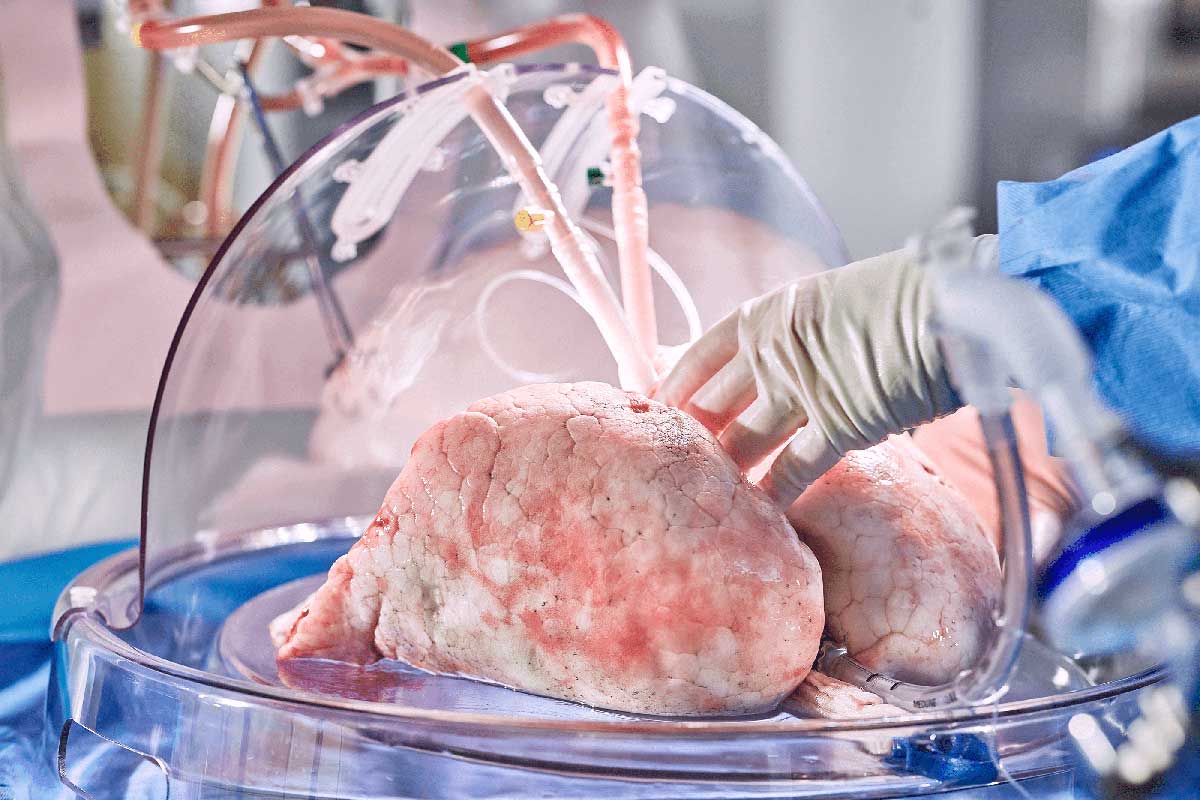
After viability is confirmed and recovery is approved, organs are placed in cold preservation solutions that reduce metabolic demand and prevent ischemic injury. Static cold storage is most common, where organs are cooled and preserved in specialized solutions. Machine perfusion is increasingly used for kidneys and livers—organs are connected to machines that pump preservation solution through them, maintaining some level of metabolic activity. This extends preservation time and may improve outcomes, particularly for higher-risk organs. The choice of preservation method depends on organ type, expected preservation time, and institutional capabilities.
Written By:

Transplants.org Staff
Last Reviewed: February 26, 2026
Informed By:
Transplants.org, with participation from 23 leading U.S. transplant centers, led the largest comparative analysis of patient educational materials in transplant history. We recognize the participating centers who helped inform and inspire our direction with initial patient-centered educational content:
- Mayo Clinic (Co-Author)
- Vanderbilt University Medical Center (Co-Author)
- Johns Hopkins Hospital (Co-Author)
- UCLA Medical Center (Co-Author)
- UCSF Medical Center (Co-Author)
Transplants.org is an independent nonprofit organization and participation is not an endorsement by these organizations.